Showing posts with label Christianity. Show all posts

Thursday, February 6, 2020

Who's Stephen Feinstein?


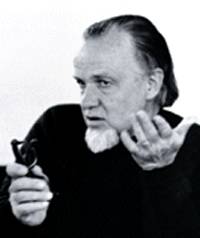
Image result for Stephen Feinstein
Pastor Stephen Feinstein
By Stephen Feinstein

Grace and peace to my fellow Southern Baptists. With the advent of the New Year, Dr. Chris Bolt announced his intention to nominate me as the 2VP of the Southern Baptist Convention. Whether or not it is the Lord’s will I am elected to this position remains to be seen. We’ll have to wait until Orlando. I figured in the meantime it would help if I wrote blogs that help Southern Baptists get to know me better. Likely, you have never heard of me. Hence, here's an article titled, "Who's Stephen Feinstein?" In short, I'm a Jewish Christian, husband, father, pastor, Army Chaplain, Martial Artist, and writer. I pastor a relatively small church in Hesperia, California.
Image result for Chris Bolt
Dr. Chris Bolt
This particular post will focus on my relationship and work within the Southern Baptist Convention. I was one of the original founding pastors of my current church, Sovereign Way Christian Church (SWCC). We were a non-denominational church plant in 2010. We started out pretty strong and kept growing. Within a few years we were already at one-hundred members, and momentum was on our side. In 2013, we thought our impact for the kingdom would be further enhanced by affiliating with the SBC. Yes, we were somewhat ignorant of all the mechanisms of the SBC, but we liked Al Mohler, and we were impressed with SBTS and its many published professors. We figured if that is what the SBC produces, it might be a good idea to affiliate with it. I already possessed a MA in Theological Studies from Liberty University’s seminary, but I desired more training to meet the needs of the flock I shepherd. So I enrolled in SBTS’s distance learning program and graduated with a MDiv in 2017. I was so blessed by what I learned from the world class professors out of Louisville. I also learned more of what it means to be Southern Baptist.
You see, back in 2013, we did not understand the Cooperative Program, or the IMB, or the NAMB. We were told that it was expected that we give some financial support to the SBC, but the “how to” was not obvious to us. My time at SBTS educated me on what the SBC entities are, and we quickly started giving to the IMB and NAMB. My elder board at that time did not necessarily have my vision for further involvement in the SBC and the support of missions, but eventually additional godly men joined the board that shared the same vision. So each year, our giving to the IMB and NAMB increased. We budgeted more money to those entities than the CP simply because we understood them better. Even though we had money set aside for the CP, I had a hard time figuring out how to give specifically to it. So we would normally just roll that money into the IMB. After all, the main reason the SBC exists is to have Christ proclaimed to all nations. Thankfully, just a few weeks ago, someone sent me a link enabling us to give directly to the CP through our State SBC website. I am very thankful for that. I have since come to understand how the seminaries depend on that money, as does the ERLC, and of course the IMB and NAMB. So my plan is to shift our budget and give more to the CP. Our church, SWCC, firmly believes in the work the SBC does and has supported it the best we knew how since our affiliation in 2013.
In my opinion, my greatest support to the SBC comes from my desire to see it thrive. I have lost count of how many I have urged to be educated at our seminaries. I have also appealed to a number of non-denominational churches, hoping to see them join the SBC and our cooperative efforts. Since I love the SBC, I also wish to protect it from internal threats. One major threat I see rising is Critical Theory and all of its subordinate frameworks. If you don’t know what Critical Theory is, then I suggest you look up Neil Shevni and read his work on it. You will quickly see how dangerous it is. Sadly, it is fast becoming the zeitgeist of the cultural elites and the universities in our society. As such, it is beginning to creep into the church. Since the SBC is determined to rightly pursue racial reconciliation, our good intentions can easily be derailed by Critical Race Theory, one of the subordinate frameworks of Critical Theory. Certainly, the SBC’s tragic and sinful past with regard to race relations necessitates that we take the lead in biblical, racial reconciliation. But Critical Race Theory (CRT) is not the way. Biblical justice is now threatened to be eclipsed by secular notions of social justice.
Image result for critical race theory
Seeing how real this threat is, I proposed a resolution in 2019. And let me quickly say this. The fact that a pastor of a small church could propose a resolution that would eventually come to the floor shows how amazing the SBC truly is. A church like mine has a voice in the U.S.’s largest Protestant denomination. Getting back to the point, my proposed resolution was designed to get the SBC to denounce CRT and its tool, Intersectionality (I). Unfortunately, what I wrote was not researched enough, and I conflated CRT with Critical Theory itself. So the Resolutions Committee changed the proposed resolution into what became known as Resolution 9. Sadly, this resolution has unintentionally caused more division than unity. It has created more heat than light. I have repeatedly insisted the Resolutions Committee did nothing nefarious. Most people have exaggerated or misunderstood what Resolution 9 states, and so they have wrongly claimed it encourages CRT/I to be used within the SBC. I think that is an overstatement. The members of the 2019 Resolutions Committee are very godly people who hold a conservative Christian worldview. The weakness with Resolution 9, however, is found in its failure to address the Critical Theory worldview and its absolute incompatibility with Christianity. Thus, any use of CRT/I is unwise.
Image result for Stephen Feinstein
My thoughts on Resolution 9 discussed in a video.
So I have spent much effort since June 2019 trying to convince people to stop slandering the leaders of our institutions over this issue. At the same time, I also labored to pass resolutions at state conventions concerning CRT. I also plan on proposing a new resolution in 2020 that should hopefully put a lot of this to rest. I already have the draft written, and I think it is the strongest one I have written thus far. I bring these matters up for two reasons. First, there are ways to strengthen the denomination that are not quantifiable like CP giving. I think my labor for the SBC falls under the non-quantifiable category. Rather than merely complaining about a real threat to the SBC, I am working hard to do something about it. You cannot put a price tag on that. Second, it explains why I will be nominated for 2VP, since it was my work on these matters that got the attention of Dr. Bolt in the first place.
There were also other factors caused him to think I might be a good person for the position of 2VP. The other factors include me being a Jewish believer in Jesus that pastors an ethnically diverse Gentile church in hostile California, while at the same time serving as a NAMB missionary in the United States Army Reserves as Chaplain (I presently hold the rank of Major). Furthermore, I served the church bi-vocationally for seven years, where I worked as a public high school teacher while I pastored SWCC nearly full time. So I understand small church dynamics within a post-Christian environment (CA) as well as the more and more common reality of bi-vocational shepherding. My experience in the Army also fashioned me to work well with those who hold positions different than my own. In future posts I will expand on how these various factors shaped me. Dr. Bolt and many others think the SBC should platform pastors that represent my kind of experience. I waited a few weeks after he asked me if he could nominate me. I prayed much and sought a lot of counsel. When it was all done, I agreed. I think Dr. Bolt is right. Quite often, pastors of large urban churches that give much to the CP are nominated for these positions. Most certainly, those pastors and their ministries are extremely important and benefit us all. The average SBC pastor and church, however, hardly resembles those who usually receive a platform within the SBC. Both kinds of pastors should have a seat at the proverbial table. If I get elected as 2VP, then we can rejoice in the fact that there is a place at the table for pastors like me. Stay tuned for more posts. 

Friday, January 9, 2015

Is It True?

By Pastor Stephen Feinstein


Hello everyone, with the new year, I am going to give my blog another try. My goal is to post at least once a week, and so please check back at least that much if you wish to follow along. Last year I started to summarize the Complete Works of Francis A. Schaeffer: A Christian Worldview. The reason for this is simple. Schaeffer was a brilliant Christian of the 20th Century, and he took the Christian worldview and rightly applied it to all aspects of the Christian life. How we think, how we feel, how we sing, how we write, how we do art, how we communicate, and all other things are to be distinctly Christian. Worldview training is something that is lacking in churches across the land, and so I thought I would take up that battle here with this blog. Thus far we have been going through Schaeffer’s book, The God Who Is There, where he traces how Western Civilization lost its way, and responds by giving the solution. So we will pick up where I last left off.

After explaining very precisely what man’s dilemma is as well as God’s solution to our dilemma, Schaeffer then moved to the next logical question. Is it true? If so, how do we know it is true? His chapter on this is very insightful. After all, what this question is really asking is whether or not the gospel is really true? If so, how can we know it?

He begins with an illustration. Imagine that you have a book in an old house, but each page is radically torn to where there only exists a paragraph for each page. With the tattered book, no man could reasonably know what the story is about. It is unintelligible. Of course, a handful of things could be learned from the existing scraps, but the story of the book could not be discerned. One thing that would be obvious is that the fragments of writing on each page are not the product of random chance or time. They are obviously products of design, but due to the tattered nature of the book, no one could know what the purpose of that design was. Well, what would happen if in the attic of the house there were hundreds of torn pieces of paper that apparently match the pages torn out of the book? And what would happen if after taping it all back together, the new paragraphs mixed with the previous ones give a coherent story from start to finish? Would we not conclude that we have the full story and purpose of the book? What else could we possibly conclude if the following two facts are true? First, the torn pages outside of the book match the torn pages inside of the book. Second, once the book was reassembled there exists a perfectly coherent story. Would we not be forced to conclude that these two facts are indisputable evidence that the torn pages outside of book truly belong in the book and reveal the true purpose and explanation of the book? Any rational person would have to agree.

In Schaeffer’s illustration, the ripped pages in the book represent the abnormal universe and the abnormal humanity that now exists. A universe that is orderly, and yet is headed toward entropy (self-destruction), and an immoral humanity with moral absolutes is clearly abnormal. A mortal humanity that has immortality on its heart is also abnormal. Clearly, if we only had an abnormal universe and an abnormal humanity to study, then we would be like the person trying to understand the tattered book by only reading the fragments left within the broken book. We only could know that the pieces we can see are not random, but other than that we could not the know the story or the purpose. The Scriptures are the torn pieces found in the attic. With them, all the pieces come together. It explains all that is missing from the tattered book, and it coherently makes sense of everything. It defines the problem, and it shows the solution. It enlightens us to what went wrong and how it will be fixed. More than that, it accurately addresses the obvious abnormality of the universe and man, explains the cause, provides the meta-narrative that illuminates the solution, and it does this without true contradiction. No other worldview even comes close to doing this.

Materialists simply stare at the abnormal universe and abnormal man and try to reason from that starting point. When they do so, they do it in a way that causes them to deny the obvious traits of design that are apparent in the universe and man. Other religions are no better. They do not get the dilemma right, and therefore they do not offer any real solution. Only Christianity provides the explanation. Schaeffer writes, “The question is whether the communication given by God completes and explains the portions we had before and especially whether it explains what was obvious before, though without an explanation – that is, that the universe exists and the universe and “mannishness” of man are not just a chance configuration of the printer’s scrambled type.” To put it another way, Christianity alone is like the situation where the torn pages outside the book match the pages inside the book. Furthermore, it alone creates a coherent story once it is combined with the pages inside the book. These two facts are indisputable evidence that the Bible is what it claims to be, namely, the Word of God.

But it is important to move beyond illustrations and discuss the nature of proof. Scientific proof, philosophical proof, and religious proof all follow the same rules. In each of these fields, we have many problems that we wish to solve, and thus once we define the question that we seek to answer, the nature of proof consists of two steps. First, our theory must be non-contradictory and must give an answer to the defined question. Second, we must be able to live consistently with our theory. In chemistry, our theory about a given chemical reaction must conform to what we see in the test tube. Likewise, the explanation concerning abnormal humanity must conform to what we observe at large in man, especially with his behavior.

If you assume the atheist position that impersonal time plus chance have produced personal man, then you have a problem. Your theory runs against all experience and observation. Furthermore, it requires a leap of faith to believe impersonal foundations can create personal beings since such has never been observed. All experience shows that persons come from persons. We have seen farmers create a farm, but we have never seen a farm create a farmer. We have seen people create factories, but we have never seen factories create people. So against all experience and observation, the materialist must appeal back to some single event where the opposite allegedly occurred, and somehow started the chain reaction of personal foundations now leading to persons. For sure this is a metaphysical position rather than one of physics. Furthermore, it must cling to irrationality at its core. An impersonal universe mixed with impersonal time and impersonal chance has no true direction and no true purpose. Thus, it has no rational basis, but instead is by definition irrational. And yet the atheist seeks to be rational in his thinking, in his understanding of science, and in his social opinions. Clearly, the atheistic/materialistic answer to the question of the abnormal universe and abnormal man cannot be lived out consistently. It does not match what we see in the real world. It does not match our experience. It is inherently irrational, and therefore it is received by faith. It is no better than the mystical leap that was taken by liberal theologians.

This is compounded further when one observes how the materialist lives. If the materialist is right, then man is nothing more than a machine. We are nothing more than matter governed by impersonal chemistry. This then would make our personhood actually an illusion since everything that makes man is truly impersonal. Yet, does the materialist live as though our personhood is an illusion?  No. As Schaeffer said, “He may be one thing in the laboratory, but something completely different when at home with his wife and children.” In other words, he loves them, he kisses them, he sacrifices of himself for them because his very actions show that he knows they are persons that are more than machines. They are deserving of dignity, and he gives it to them. He loves them. This is one more piece of evidence that the materialist cannot live according to his worldview. He must borrow from the Christian worldview every single day just to be able to live his life as he now does. And this is not just the experience of any given materialist, but this is the universal experience for all humanity as far back as we have records. Ancient burial sites, cave drawings, and general artifacts of so-called primitive man all demonstrate that humans have always lived as though we are not machines. We have always lived as though we are truly persons. We have always lived as though we possess intrinsic dignity. How can this be if the materialist is right about his theory?

Christianity begins with the existence of the infinite-personal God and man’s creation in His image and a Fall that happened in space and time. In its presentation of this, God’s Word is without contradiction. Furthermore, Christianity presents an answer that is livable. Its answer matches daily human experience. Its truth allows for the increased knowledge of man, the pursuit of scientific discovery, and yet it also accounts for the fact that something is greatly wrong with us. So why do atheists reject the truth? It is because they accept without any question their fundamental assumption. They assume, or better put, they believe by faith, that there exists a uniformity of nature in a closed-system. By faith they believe that uniformity exists without explanation, and that the universe is a closed system with no outside actor. Transcendentally this is impossible, and therefore some materialists these days are appealing to a multiple universe model, but that too fails. It is nothing more than an escape device that supposedly bails them out of their groundless position.

So in the end, what is it going to be? Unbelieving man is left with either rationalism or irrationalism. Rationalism is the idea that man can autonomously learn truth, meaning, and purpose to the universe with his own intellectual faculties alone. Human finitude makes this impossible. We are too limited to justify true knowledge due to our lack of omniscience. Thus, others embrace irrationality. Irrationalism is the idea that there is no meaning to anything, and human reasoning is incapable to proving the contrary. So we are left with skepticism then. Yet, no one lives this way. Even the skeptic walks around as if he knows things and interacts with the world as though there is meaning and purpose. So he too is wrong in his assumption.

The Christian is not in the same sad state of groundless epistemology. We are rational, though not rationalists. We know A is A and A is not non A. We believe in reason. The difference is we know that reason cannot begin with man. Reason exists because God exists and He created the world reasonably and created mankind to interact with the world using reason. This is why humans can know and learn things despite our finitude. We do not need to embrace purposeless irrationalism. And we can justify the existence of rational thought. Once again, our worldview alone makes sense of everything we see in human experience, including even the ability to reason.

Schaeffer provided a very strong and rational basis for Christian belief with what he wrote in this chapter, and at the same time he savaged unbelieving thought. Yet, he also did not want anyone to miss the big point of it. All of this is meant to cause us to marvel at the wonders of God who made all that we see, and who is the ground for all that we experience. May we praise the God of the Bible. May we ever draw closer to Him in worship and adoration. Amen.